
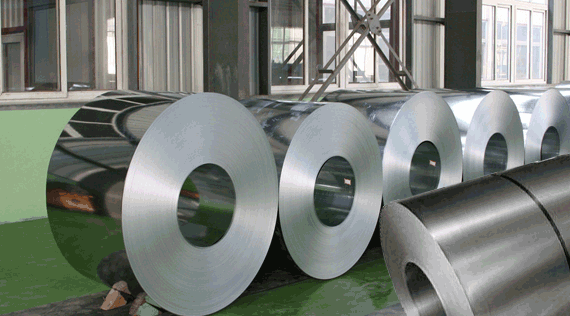
The global market for hot-rolled coil in February 2026 continues the upward trend that began in January. Offers in Europe have risen by €25-45/t since the beginning of the year, and in the US by $50/t. At the same time, China lags behind the trend, with an increase of only $2/t.
In February, prices for hot-rolled coil in the EU market rose to their highest level since May 2025. In particular, as of February 20, offers in Western Europe reached €665/t ex-works, up 7.3% compared to January 16, while in Italy they reached €650/t ex-works (+4%). Import offers in Southern Europe also rose by 5% to €525/t CIF. At the same time, prices for imported products are expected to decline soon.
Throughout the month, the market was influenced by the active pricing policy of manufacturers. After increases at the end of January, factories, in particular market leaders, consistently announced new steps – up to +€50/t, forming a benchmark of over €700/t with delivery in May. The tactic of pausing sales and shorter price offer periods allowed mills to test buyers’ willingness to accept higher levels, even despite weak demand.
At the same time, warehouse stocks, formed due to active purchases ahead of the introduction of CBAM, restrained real business activity. Imports in Southern Europe were limited by uncertainty about the costs of the mechanism and quotas, although some offers from Turkey and the Middle East remained competitive.
Negotiations on long-term contracts in Germany were an important event: an increase of €45-60/t established a new base level, supporting spot expectations.
Going forward, the market will look for a stable, acceptable price. With stocks gradually declining and delivery times lengthening, prices may remain stable in March, but weak end-user demand and likely cheaper imports will limit the potential for further growth.
In the United States, HRC prices reached their highest level since February 2024 and have remained above $1,000/t for about two months. As of February 20, 2026, offers stood at $1,069/t ex-works, up 2.4% from January 16 and 4.9% since the beginning of the year.
Throughout February, the key market driver was the consistent pricing policy of producers, primarily Nucor, which raised its official offer by $5/t for five weeks in a row and by another $10/t at the end of the month. This allowed the spot range to be pulled up and expectations of further growth to be consolidated.
Additional support for prices came from supply disruptions due to winter storms, shipment delays, and slab shortages at some manufacturers. Some mills did not offer spot cargoes or fell behind in fulfilling orders, which shifted demand in favor of more stable suppliers. Imports remained limited, and offers from Asia did not create significant pressure due to logistics and customs duties.
At the same time, demand grew moderately – activity in the automotive sector remained subdued, construction depended on the weather, but steel production and capacity utilization gradually increased.
The market is expected to maintain similar dynamics until March, but accumulated stocks at service centers and seasonal factors create the risk of stagnation or correction in the second quarter.
In China, prices have remained stable since the end of January at $472/t FOB. Currently, offers are $2/t higher than at the end of 2025.
In February, the market remained under pressure from weak demand ahead of the Spring Festival and rising inventories. HRC futures on the Shanghai Exchange gradually declined to quarterly lows, while spot prices adjusted slightly. Activity declined even before the start of the holiday break.
Export prices remained largely stable thanks to supply agreements with the Middle East and competition among suppliers. Additional support came from fluctuations in commodity markets and the coking coal factor.
After the holidays, a short-term recovery in activity is possible, but weak domestic demand dynamics will limit growth potential.